Airline strike extraordinary circumstances rules decide whether you walk away with nothing or with compensation of up to £520. If your flight was delayed or cancelled because airline staff walked out, it's easy to assume the airline is off the hook. In most cases, that assumption is wrong.
This guide builds on our earlier piece about flight delay strike compensation and goes further, breaking down exactly how the law treats airline staff strikes, why the courts have ruled the way they have, and what you can do if an airline wrongly refuses your claim.
What counts as an extraordinary circumstance under UK261?
Under UK261 (the retained version of EU Regulation 261/2004), airlines don't have to pay compensation when a delay or cancellation is caused by something genuinely outside their control. These are known as extraordinary circumstances, and they cover things like severe weather, security threats, political unrest, and hidden manufacturing defects.
We cover the full list of qualifying events in our dedicated guide to extraordinary circumstances in delayed flights explained.
Strikes sit in a grey area, because not every strike is treated the same way. The identity of the people striking, and who employs them, makes all the difference.
The legal test: is a strike inherent to running an airline?
Courts assess two things when deciding whether a strike qualifies as extraordinary. First, whether the event is inherent in the normal exercise of an airline's activity. Second, whether the event is genuinely beyond the airline's control.
Industrial action by an airline's own workforce fails both tests. Negotiating pay and conditions with staff is a routine part of running an airline, and the right to strike is a foreseeable, legally protected activity. Because an airline can see a lawful strike notice coming, it retains a meaningful degree of control over how it prepares for and manages the disruption.
The Airhelp v SAS ruling
The clearest statement of this principle came from the Court of Justice of the EU in a case brought by Airhelp against SAS, after a pilots' strike grounded a flight from Malmö to Stockholm in 2019. SAS argued the strike was extraordinary because it was beyond the airline's control.
The Court disagreed. It found that a lawful strike by an airline's own staff, arising from labour negotiations, is inherent to the normal running of the business and therefore cannot be classed as extraordinary. The ruling confirmed that affected passengers were entitled to compensation, and it remains the leading authority on airline staff strikes across the UK and EU.
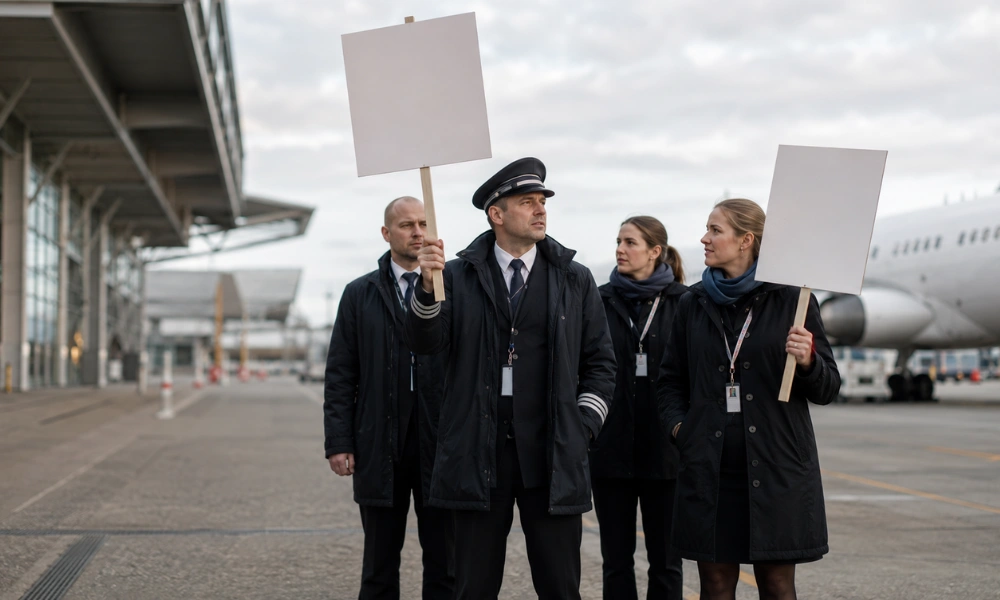
Airline staff strikes vs third-party strikes
The key distinction is whether the people striking are employed directly by the airline, or by a separate organisation the airline doesn't control.
- Pilots, cabin crew and airline-employed ground staff: this is an internal, UK261 airline staff strike. Compensation is usually payable.
- Air traffic controllers: employed by national aviation authorities, not the airline. Generally treated as extraordinary.
- Airport security or border force staff: employed by the airport or government, not the airline. Generally extraordinary.
- Independent ground handlers or baggage teams contracted by the airport: usually extraordinary, unless the airline itself employs them directly.
If you're unsure which category applies to your disruption, our earlier article on flight delay strike compensation examples covers common examples and how airlines describe them.
Not sure whether your strike delay qualifies?
Every case depends on who was striking and why. If you'd like a straight answer rather than guesswork, our team can review your flight details and tell you where you stand. get in touch with our claims team.
What compensation can you claim for a staff strike delay?
If your flight was delayed by three hours or more at arrival, or cancelled with less than 14 days' notice, and the cause was an airline staff strike, you're entitled to fixed compensation based on flight distance:
- Up to 1,500km: £220
- 1,500km to 3,500km: £350
- Over 3,500km: £520
These amounts apply regardless of your ticket price, and you can claim going back up to six years for flights departing the UK (five years for flights from Scotland). You're also entitled to care and assistance during the disruption itself, including meals, communication, and hotel accommodation if you're stranded overnight.
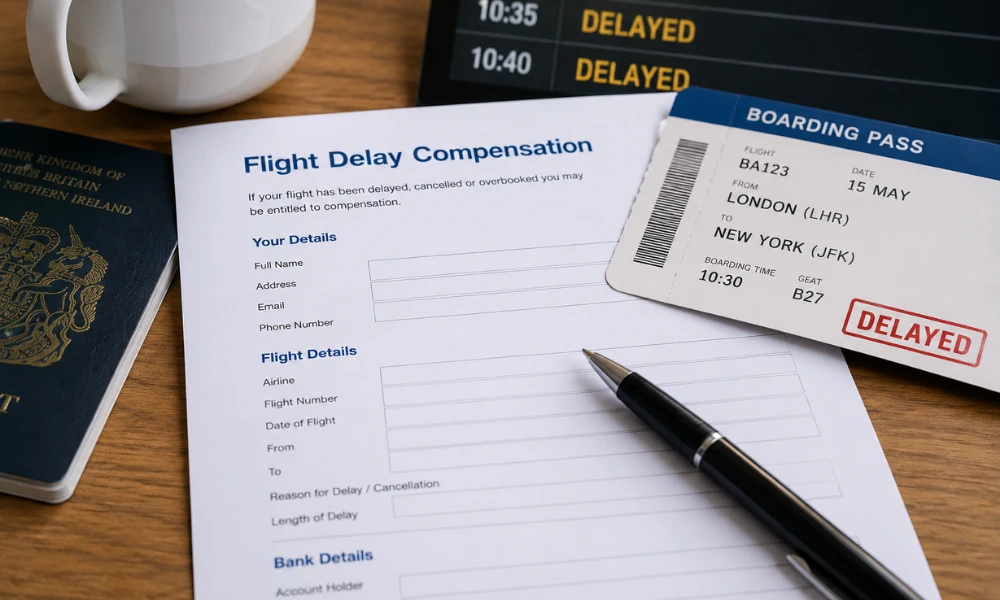
What if the airline blames air traffic control or airport staff instead?
Airlines sometimes describe a disruption simply as "a strike" without clarifying who was actually striking. This matters enormously, because ATC and airport-staff strikes generally do count as extraordinary circumstances, meaning no financial compensation is owed, even though care and assistance still apply.
Don't take the airline's summary at face value. Ask for written confirmation of exactly whose strike caused the disruption, and cross-check it against news coverage from the day. If other airlines managed to operate through the same conditions, or the airline's own scheduling made the disruption worse, the extraordinary circumstances defence can start to look shaky even in ATC-related cases.
When even an internal strike could count as extraordinary
There's one narrow exception worth knowing about. If airline staff strike over demands that only a government or public authority can meet, such as national pension reform, that action could fall outside the airline's control and be treated as extraordinary, because the airline itself has no power to resolve the dispute.
This scenario is uncommon. Most airline staff strikes centre on pay, rosters, or working conditions the airline itself negotiates, which keeps them firmly inside the general rule: compensation is owed.
How to challenge an incorrect "extraordinary circumstances" rejection
- Request written confirmation of the exact cause of your delay or cancellation, naming who was striking.
- Check whether other airlines flew the same route on the same day without disruption.
- Keep boarding passes, app screenshots, and any communication from the airline as evidence.
- Compare the airline's explanation against independent strike coverage for that date.
- If your claim is refused, escalate it, or submit it for a professional review rather than accepting the first answer.
Airlines aren't always wrong to cite extraordinary circumstances, but they aren't always right either. Getting the facts pinned down in writing is the single most useful thing you can do when you're pursuing flight delay compensation for a strike.