- Home
- Make a claim
- Airlines
- Adria Airways
- Aegean Airlines
- Aer Lingus
- Aeroflot Russian Airlines
- AeroMexico
- Air Albania
- Air Algerie
- Air Arabia
- Air Austral
- Air Baltic
- Air Canada
- Air China
- Air Corsica
- Air Dolomiti
- Air Europa
- Air France
- Air India
- Air Malta
- Air Mauritius
- Air Moldova
- Air New Zealand
- Air Philippines
- Air Senegal International
- Air Serbia
- Air Transat
- Alitalia Express
- All Nippon Airways
- American Airlines
- Arkia Israel Airlines
- ASL Airlines
- Atlantic Airways
- Aurigny Air Services
- Austrian Airlines
- Avianca
- Azerbaijan Airlines
- Azores - SATA International
- Biman Bangladesh Airlines
- Blue Air
- Blue Islands
- Bluebird Airways
- BMI Regional
- British Airways
- Brussels Airlines
- Brussels International Airlines
- Bulgaria Air
- Buzz Stansted
- Cathay Pacific
- China Airlines
- China Eastern Airlines
- Continental Airlines
- Corendon Airlines
- Croatia Airlines
- Cyprus Airways
- Czech Airlines
- Delta Air Lines
- Eastern Airways
- easyJet
- Egyptair
- El Al
- Emirates
- Envoy Air
- Ethiopian Airlines
- Etihad Airways
- Eurowings
- Finnair
- Fly One
- Flybe
- Flyr
- Gol Transportes Areos
- Gulf Air
- Helvetic Airways
- HiSky
- Iberia Airlines
- Iberia Express
- Icelandair
- Iran Air
- Iraqi Airways
- ITA Airways
- Japan Airlines
- Jazeera Airways
- Jet Airways
- Jet2
- JetBlue
- Juneyao Air
- Kenya Airways
- KLM
- Korean Air
- Kuwait Airways
- LATAM Airlines
- Lauda Europe
- Loganair
- LOT Polish Airlines
- Lufthansa
- Luxair
- Malaysia Airlines
- Norse
- Norwegian
- Nouvelair Tunisie
- Pakistan International Airlines
- Pegasus Airlines
- Play Airlines
- Qantas
- Qatar Airways
- Riyadh Air
- Rossiya Russian Airlines
- Royal Air Maroc
- Ryanair
- SAS
- Saudia
- Scoot
- Silk Way Airlines
- Singapore Airlines
- Sky Express
- South African Airways
- SriLankan Airlines
- SunExpress
- Sunwing Airlines
- Surinam Airways
- Swiss International
- TAP Air Portugal
- Thai Airways
- Transavia
- TUI
- Tunisair
- Turkish Airlines
- Turkmenistan Airlines
- Ukraine International Airlines
- Vietnam Airlines
- Virgin Atlantic
- Vueling Airlines
- WestJet
- Wideroe
- Wizz Air
- Airports
- FAQ's
- Compensation Calculator
- Recent Flight Delays
- Blog
- About Us
- Contact Us
Why do flight prices go up and down?
Date: 28 AUG 26
Why do flight prices go up and down? Airlines continually manage the prices and booking classes available on each flight as demand, remaining inventory and commercial strategy change. Competition, seasonality, events and time to departure all feed into that process, which is why the same route can show a different fare hours or days later.
Do flight prices go up because you keep searching?
There is no good reason to assume that simply refreshing the same search makes an airline raise a fare specifically for you. Skyscanner states that it does not adjust prices based on cookies, location or search history; the offers it displays come from airlines and travel agents. A fare can still change between searches because live inventory or the provider's price changed in the meantime.
Why do flight prices go up and down between fare classes?
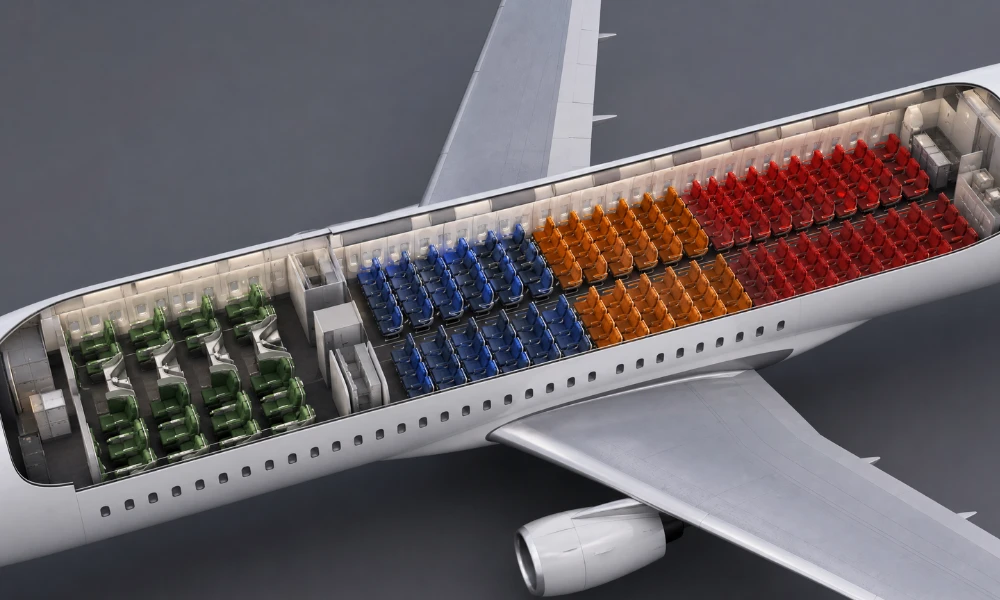
Traditional airline revenue management uses booking classes or fare buckets to control how many seats are available at different price points. IATA explains that inventory systems open and close fare classes while pricing teams adjust them in response to demand and airline strategy. Modern retailing can also use more continuous or dynamic offers, so 'a fixed stack of buckets' is a useful explanation, not the whole pricing system.
- If several seats are sold from the lowest available booking class, the next customer may see a higher fare even though the aircraft still has many empty seats.
- Lower-priced fare products often carry more restrictions or fewer included extras, but the exact rules vary by airline and ticket type; compare baggage, changes and seat selection as well as the headline fare.
- A lower-priced booking class can sometimes become available again, but a cancellation does not guarantee the same cheap fare will reappear because the airline's revenue-management controls may have changed.
Demand and timing drive most of the swings
Underneath the fare-bucket system, the biggest driver of price is simple supply and demand:
- Seasonality — prices climb around school holidays, Christmas and New Year, and other peak periods, and tend to ease off in the shoulder seasons either side.
- Events at the destination — concerts, major sports fixtures or conferences can push demand, and prices, up for specific dates.
- Competition on the route — routes served by several airlines tend to have more competitive pricing, while routes with only one or two operators can carry a premium.
- Disruption and irregular operations — storms, airport constraints or cancellations can shift demand onto remaining flights and change available fares, although pricing responses vary by route and airline.
Why last-minute flights are often (but not always) pricier
Closer to departure, the cheapest booking classes are often less available, and airlines may also expect more time-sensitive travellers. That is why waiting is risky when you already need a particular flight. An undersold service can still fall in price, but a last-minute drop is not reliable enough to plan around.
That said, it isn't a hard rule. If a flight is genuinely undersold close to departure, an airline may still discount seats rather than fly with empty ones, which is part of why some late deals do appear — just less reliably than on flexible package holidays.
What can make prices drop
- Demand for a route running lower than the airline expected.
- A promotional sale or short-term discount from the airline.
- A competitor cutting prices on the same or a similar route.
- A larger aircraft being swapped onto the route, adding more seats and more low-price buckets.
Does the day you book or fly actually matter?
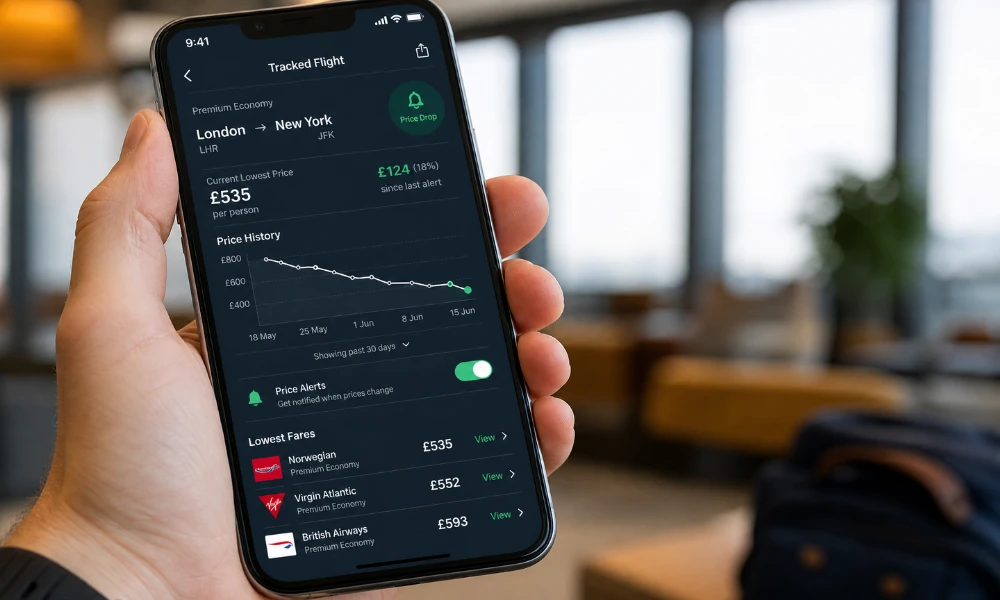
There is no universal booking weekday that guarantees the cheapest airfare. Flying on lower-demand dates can be cheaper on some routes, but the pattern changes with season, events and capacity. It is usually more useful to compare nearby dates and set a price alert than to wait for a supposed 'magic Tuesday'.
Whatever you paid for your ticket, delay compensation isn't based on your fare
Whatever you paid for the ticket, UK261 fixed compensation is based principally on flight distance and the qualifying delay/cancellation circumstances rather than the fare price. A cheap ticket does not automatically mean a smaller fixed award. Check the UK261 guide or use the compensation calculator if your journey was disrupted.
Frequently asked questions
Does searching for flights repeatedly make the price go up?
Not simply because you searched again. Live fares can change as booking-class availability, demand or provider offers change. Skyscanner specifically says it does not alter its displayed prices based on cookies, location or search history.
Is it cheaper to book flights on a certain day of the week?
No single booking day is guaranteed to be cheapest. Compare nearby travel dates, use fare alerts and book when the price and itinerary meet your needs rather than waiting for a weekday rule.
Why did my flight go up in price after I looked at it earlier?
A lower-priced booking class may have sold out, the airline may have changed which fares are open, or a live agency/airline offer may have updated. The fact that the change happened after your earlier search does not by itself show that your personal search history caused it.
However much you paid, a qualifying disruption may still lead to UK261 compensation. Check Your Flight for an eligibility check and see the FAQs for common conditions and exceptions.
claim now
Have you had a flight delay, missed connection, cancelled flight or have been denied boarding in the last 6 years? If so try our free flight checker to see how much you may be entitled to in compensation for you AND your fellow travellers.
Start a Claim