- Home
- Make a claim
- Airlines
- Adria Airways
- Aegean Airlines
- Aer Lingus
- Aeroflot Russian Airlines
- AeroMexico
- Air Albania
- Air Algerie
- Air Arabia
- Air Austral
- Air Baltic
- Air Canada
- Air China
- Air Corsica
- Air Dolomiti
- Air Europa
- Air France
- Air India
- Air Malta
- Air Mauritius
- Air Moldova
- Air New Zealand
- Air Philippines
- Air Senegal International
- Air Serbia
- Air Transat
- Alitalia Express
- All Nippon Airways
- American Airlines
- Arkia Israel Airlines
- ASL Airlines
- Atlantic Airways
- Aurigny Air Services
- Austrian Airlines
- Avianca
- Azerbaijan Airlines
- Azores - SATA International
- Biman Bangladesh Airlines
- Blue Air
- Blue Islands
- Bluebird Airways
- BMI Regional
- British Airways
- Brussels Airlines
- Brussels International Airlines
- Bulgaria Air
- Buzz Stansted
- Cathay Pacific
- China Airlines
- China Eastern Airlines
- Continental Airlines
- Corendon Airlines
- Croatia Airlines
- Cyprus Airways
- Czech Airlines
- Delta Air Lines
- Eastern Airways
- easyJet
- Egyptair
- El Al
- Emirates
- Envoy Air
- Ethiopian Airlines
- Etihad Airways
- Eurowings
- Finnair
- Fly One
- Flybe
- Flyr
- Gol Transportes Areos
- Gulf Air
- Helvetic Airways
- HiSky
- Iberia Airlines
- Iberia Express
- Icelandair
- Iran Air
- Iraqi Airways
- ITA Airways
- Japan Airlines
- Jazeera Airways
- Jet Airways
- Jet2
- JetBlue
- Juneyao Air
- Kenya Airways
- KLM
- Korean Air
- Kuwait Airways
- LATAM Airlines
- Lauda Europe
- Loganair
- LOT Polish Airlines
- Lufthansa
- Luxair
- Malaysia Airlines
- Norse
- Norwegian
- Nouvelair Tunisie
- Pakistan International Airlines
- Pegasus Airlines
- Play Airlines
- Qantas
- Qatar Airways
- Riyadh Air
- Rossiya Russian Airlines
- Royal Air Maroc
- Ryanair
- SAS
- Saudia
- Scoot
- Silk Way Airlines
- Singapore Airlines
- Sky Express
- South African Airways
- SriLankan Airlines
- SunExpress
- Sunwing Airlines
- Surinam Airways
- Swiss International
- TAP Air Portugal
- Thai Airways
- Transavia
- TUI
- Tunisair
- Turkish Airlines
- Turkmenistan Airlines
- Ukraine International Airlines
- Vietnam Airlines
- Virgin Atlantic
- Vueling Airlines
- WestJet
- Wideroe
- Wizz Air
- Airports
- FAQ's
- Compensation Calculator
- Recent Flight Delays
- Blog
- About Us
- Contact Us
When to book a last minute holiday
Date: 24 AUG 26
If you're deciding when to book a last minute holiday, there is no guaranteed cheapest day. Package prices can fall in the final weeks when operators still have unsold stock, but the trade-off gets sharper as departure approaches: the price may improve while your choice of destination, airport, room type and travel date shrinks.
When to book a last minute holiday for the best chance of a deal
MoneySavingExpert's current package-holiday guidance says late booking can produce savings, including within roughly eight to ten weeks of travel. Treat that as a useful window to compare rather than a rule: the cheapest point depends on destination, season, school holidays, demand and the unsold inventory left for your dates.
If you're flexible, keep comparing as departure gets closer. If you need a particular hotel, room type, airport or school-holiday date, waiting for a last-minute reduction can backfire because the remaining choice may sell before the price falls.
Why late deals happen — and why they mostly apply to packages, not flights alone
Package operators may hold contracted hotel rooms or flight capacity that becomes less valuable if it remains unsold close to departure. Cutting a package price can therefore make commercial sense. That is one reason genuine late discounts are more common in packages than in a scheduled flight bought on its own.
Scheduled flight prices can move in either direction, but waiting until the final weeks is not a reliable saving strategy. Cheaper fare availability may disappear as a flight fills, while an undersold flight can occasionally fall in price. If your dates are fixed, compare early and use price alerts rather than assuming a last-minute airfare will be cheaper.

Flexibility is what makes a late deal cheap
The more open you can be, the more of the late-deal market you can access:
- Be flexible on destination — searching "anywhere sunny" rather than one specific resort opens up far more discounted stock.
- Be flexible on airport — checking regional departure airports alongside London ones can uncover cheaper options.
- Be flexible on dates — midweek departures can sometimes be cheaper than high-demand weekend slots, but there is no universal cheapest weekday for every route or holiday.
- Compare the full trip cost — an all-inclusive package can sometimes be better value than self-catering once food and drinks are added, but check what the package actually includes rather than assuming the label means cheaper overall.
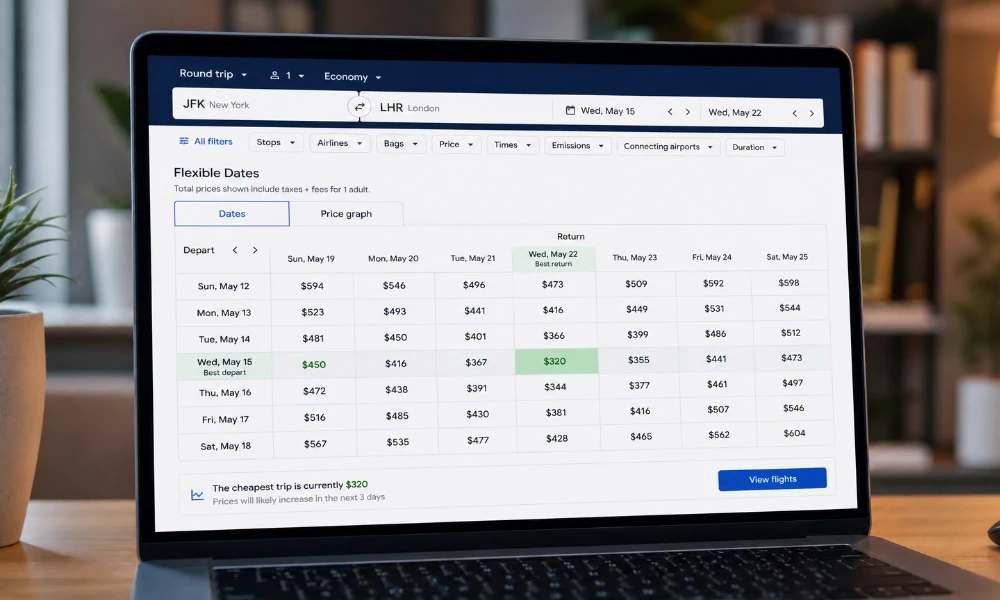
How late is too late?
Deep discounts can appear inside the final week or two when an operator still has stock to sell, but they are unpredictable rather than a dependable 'cheapest window'. At that point availability can be very limited, especially in school holidays and peak summer weeks, and you may have little choice over hotel, airport or departure time.
If you have a fixed destination, hotel, or set of dates in mind, booking further ahead is usually the safer and often cheaper route — genuine late availability for a specific, popular choice isn't guaranteed.
What to check before booking at short notice
A short-notice trip leaves little time to fix problems if something isn't in order, so it's worth working through a quick checklist before you book:
- Passport validity — requirements vary by destination, so check the official entry rules for the country you are visiting rather than relying on a generic three- or six-month rule. If your passport may need renewing, check the timing before paying for a short-notice trip.
- Visa or entry requirements — check the destination's official entry rules and allow time for any electronic travel authorisation or visa. Do not assume every authorisation is instant, particularly when travel is only days away.
- Travel insurance — arrange suitable cover as soon as you book so cancellation cover can start from the policy date, subject to its terms and exclusions.
- Package protection — if you book a UK flight-inclusive package, check whether it is ATOL protected and make sure you receive an ATOL Certificate. ATOL is financial protection if the travel company fails; it is not a substitute for travel insurance.
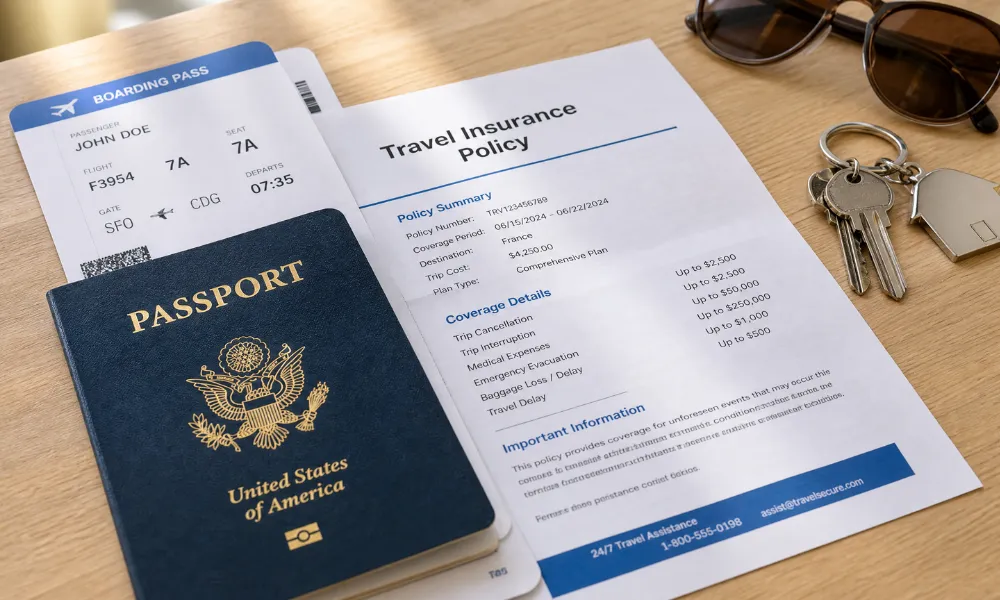
Booking at short notice already leaves little room to manoeuvre — don't let a flight problem catch you out too
If your outbound or return flight is delayed, cancelled or you are denied boarding, UK261 compensation may apply in qualifying circumstances, including up to £520 for some disruptions. Booking at the last minute neither creates nor removes that right; eligibility depends on the flight, timing and cause.
Frequently asked questions
Is it always cheaper to book a holiday last minute?
Not always. Package holidays can be discounted close to departure when operators have unsold stock, but there is no guaranteed last-minute saving. If you need a specific hotel, route or set of dates, booking earlier can be cheaper or simply protect the choice you care about.
What's the cheapest day of the week to fly?
There is no universal cheapest day to fly. Midweek departures can be cheaper on some routes because demand is lower, but the pattern changes by route, season and event dates. Compare nearby dates instead of waiting for a particular weekday rule.
Do I need travel insurance for a last-minute trip?
Arrange suitable travel insurance as soon as you book if you want cancellation cover to begin straight away, subject to the policy terms. A last-minute booking leaves less time to correct exclusions or missing cover before departure.
Whenever you book, a qualifying flight disruption may still give you passenger-rights remedies. Check Your Flight for an eligibility check, and see our flight-delay FAQs if you want to understand the main conditions first.
claim now
Have you had a flight delay, missed connection, cancelled flight or have been denied boarding in the last 6 years? If so try our free flight checker to see how much you may be entitled to in compensation for you AND your fellow travellers.
Start a Claim