- Home
- Make a claim
- Airlines
- Adria Airways
- Aegean Airlines
- Aer Lingus
- Aeroflot Russian Airlines
- AeroMexico
- Air Albania
- Air Algerie
- Air Arabia
- Air Austral
- Air Baltic
- Air Canada
- Air China
- Air Corsica
- Air Dolomiti
- Air Europa
- Air France
- Air India
- Air Malta
- Air Mauritius
- Air Moldova
- Air New Zealand
- Air Philippines
- Air Senegal International
- Air Serbia
- Air Transat
- Alitalia Express
- All Nippon Airways
- American Airlines
- Arkia Israel Airlines
- ASL Airlines
- Atlantic Airways
- Aurigny Air Services
- Austrian Airlines
- Avianca
- Azerbaijan Airlines
- Azores - SATA International
- Biman Bangladesh Airlines
- Blue Air
- Blue Islands
- Bluebird Airways
- BMI Regional
- British Airways
- Brussels Airlines
- Brussels International Airlines
- Bulgaria Air
- Buzz Stansted
- Cathay Pacific
- China Airlines
- China Eastern Airlines
- Continental Airlines
- Corendon Airlines
- Croatia Airlines
- Cyprus Airways
- Czech Airlines
- Delta Air Lines
- Eastern Airways
- easyJet
- Egyptair
- El Al
- Emirates
- Envoy Air
- Ethiopian Airlines
- Etihad Airways
- Eurowings
- Finnair
- Fly One
- Flybe
- Flyr
- Gol Transportes Areos
- Gulf Air
- Helvetic Airways
- HiSky
- Iberia Airlines
- Iberia Express
- Icelandair
- Iran Air
- Iraqi Airways
- ITA Airways
- Japan Airlines
- Jazeera Airways
- Jet Airways
- Jet2
- JetBlue
- Juneyao Air
- Kenya Airways
- KLM
- Korean Air
- Kuwait Airways
- LATAM Airlines
- Lauda Europe
- Loganair
- LOT Polish Airlines
- Lufthansa
- Luxair
- Malaysia Airlines
- Norse
- Norwegian
- Nouvelair Tunisie
- Pakistan International Airlines
- Pegasus Airlines
- Play Airlines
- Qantas
- Qatar Airways
- Riyadh Air
- Rossiya Russian Airlines
- Royal Air Maroc
- Ryanair
- SAS
- Saudia
- Scoot
- Silk Way Airlines
- Singapore Airlines
- Sky Express
- South African Airways
- SriLankan Airlines
- SunExpress
- Sunwing Airlines
- Surinam Airways
- Swiss International
- TAP Air Portugal
- Thai Airways
- Transavia
- TUI
- Tunisair
- Turkish Airlines
- Turkmenistan Airlines
- Ukraine International Airlines
- Vietnam Airlines
- Virgin Atlantic
- Vueling Airlines
- WestJet
- Wideroe
- Wizz Air
- Airports
- FAQ's
- Compensation Calculator
- Recent Flight Delays
- Blog
- About Us
- Contact Us
Two weeks in Japan – the ultimate guide of what to do and where to go
Date: 27 APR 26
Two weeks in Japan is one of the most rewarding travel experiences you can have. This remarkable country offers a contrast that few places in the world can match – neon-lit city streets sitting side by side with ancient shrines, bullet trains cutting through mountain scenery, and food that will genuinely change what you expect from a meal. If you're planning a Japan itinerary for the first time, two weeks gives you just enough time to cover the highlights without rushing yourself into the ground.
This Japan travel guide covers everything you need to know: where to go, what to see, how to get around, and what to expect when you land. We've structured it around the classic 'Golden Route' that experienced travellers recommend most – Tokyo, Hakone or Fuji, Kyoto, Hiroshima, and Osaka – with practical tips woven throughout.
Before you fly – what to sort out in advance
A trip to Japan rewards a bit of preparation. A few essentials to sort out before departure will save you a great deal of stress once you arrive.
Japan is strict about what you can bring into the country. Some medications that are widely available in the UK – including certain cold remedies containing pseudoephedrine – are classified as illegal substances under Japanese law, so check before you pack your medicine bag. Fresh food is also heavily restricted at customs.
Before you land, download a Suica or Pasmo card app on your phone. These digital transit cards work like London's Oyster card and are accepted on metros, buses, and even in many convenience stores. Topping them up is simple and using them at station gates is far quicker than queuing to buy a paper ticket each time.
You'll also want either a pocket Wi-Fi device or an eSIM sorted before you travel. Without reliable internet, navigating Japan's metro systems becomes very difficult, especially as most station signs use kanji alongside romaji. A good eSIM makes Google Maps your most reliable companion throughout the trip.
Key pre-trip checklist:
- Check medication restrictions on the Japanese customs authority website
- Download a Suica or Pasmo card app (iPhone Wallet or Google Pay compatible)
- Purchase an eSIM or pocket Wi-Fi before departure
- Fill in your customs and tourist declaration form online or on the plane – do not leave it for customs queues
- Book Shinkansen tickets in advance, particularly for the busy spring cherry blossom season
Getting around Japan – trains, metro, and the Shinkansen
Getting around Japan is surprisingly straightforward once you understand the system. The metro networks in Tokyo, Kyoto, and Osaka are number-based, meaning you follow platform numbers rather than trying to read Japanese. Google Maps handles the journey planning beautifully when you have a working eSIM.
For longer journeys between cities, the Shinkansen – Japan's famous bullet train network – is the way to travel. It is fast, punctual, and comfortable in a way that makes long-distance flying feel wasteful. The journey from Tokyo to Kyoto takes around two and a quarter hours; the one from Kyoto to Hiroshima is just under ninety minutes.
If you plan to use the Shinkansen multiple times, it's worth checking whether a JR Pass suits your itinerary. For a two-week trip covering Tokyo, Kyoto, Hiroshima, and Osaka, a seven-day or fourteen-day pass can represent good value. Buy it before you leave the UK, as it cannot be purchased once you're in Japan.
One practical note: the Shinkansen has luggage size restrictions. Bags exceeding 160cm in total dimensions (height + width + depth combined) need to be pre-booked into a designated luggage space at the rear of the carriage. It's no extra cost, but you'll need to reserve the correct seat type when booking.
Tokyo – where your two weeks in Japan begins
Most Japan itineraries begin in Tokyo, and for good reason. This city is vast, stimulating, and endlessly interesting. Four days is a reasonable minimum to get a flavour of the main areas, though you could easily spend a fortnight here and still not see everything.
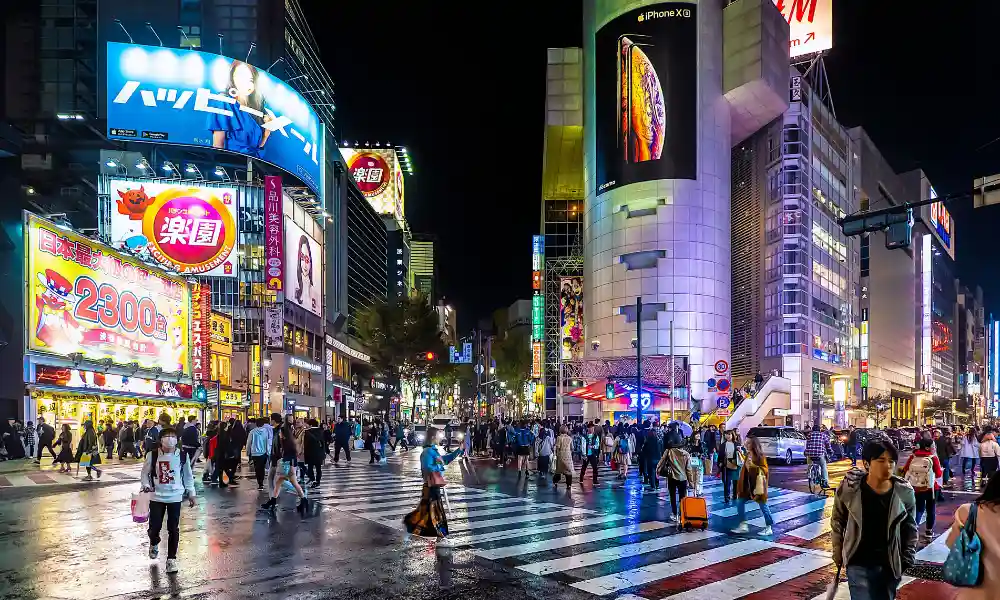
Shibuya and Harajuku
Start in Shibuya. The crossing at the centre of this neighbourhood is one of the most photographed intersections in the world – a controlled rush of hundreds of pedestrians converging from every direction, all on a green light. It's touristy, yes, but it's genuinely extraordinary to watch and experience. Head to the Starbucks above the crossing for a bird's-eye view, or book tickets to the Shibuya Sky observation deck well in advance, as slots sell out quickly.
A short walk from Shibuya is Harajuku, best known for the chaos of Takeshita Street – rainbow crepes, eccentric fashion, and a level of colour that's almost overwhelming. The real gem nearby, however, is the Meiji Jingu Shrine: a peaceful, forested sanctuary that feels completely removed from the bustle outside.
Shinjuku
Shinjuku is Tokyo at full volume. The neon signs, the Godzilla head perched on a hotel rooftop, the packed karaoke bars and the narrow laneways of Golden Gai – it's an area worth spending an evening in even if it's not somewhere you'd want to retreat to at the end of every day. The Tokyo Metropolitan Government Building in this district also offers free panoramic views over the city, which is a worthwhile stop during the daytime.
Asakusa and Akihabara
Asakusa is old Tokyo. The Senso-ji Temple – the city's oldest – sits at the end of the Nakamise shopping street and is best visited early in the morning before the crowds build. The surrounding area has a lower skyline than the rest of the city and a noticeably quieter atmosphere.
Akihabara is the opposite experience entirely. This neighbourhood is the heartland of anime, manga, and electronics culture. Multi-storey buildings devoted entirely to retro games, figurines, and themed cafés line the streets. Even if you have no interest in any of it, the sheer spectacle is worth an afternoon.
Hakone – Mount Fuji views and hot spring baths
From Tokyo, most two-week Japan itineraries head to Hakone before moving south to Kyoto. Hakone is a mountain resort town about an hour and a half from the capital, nestled in the foothills of Mount Fuji's surrounding national park.
The main draw here is the chance to see Mount Fuji itself, though visibility depends entirely on the weather. Cloud cover frequently obscures the peak, so don't plan your entire Hakone leg around it. Check a visibility forecast the night before and plan your Ashi Lake cruise or ropeway ride accordingly.
The Hakone Ropeway is one of the trip highlights regardless of whether Fuji is visible. It passes over Owakudani, an active volcanic crater where you can see sulphurous vents bubbling up through the ground and sample the local speciality – eggs hard-boiled in the natural hot spring water, which turn the shells black.
If you can manage it, stay one night in Hakone in a ryokan – a traditional Japanese inn. The rooms are laid out in the classical style with tatami flooring and futon beds, and most ryokans have access to onsen (hot spring baths). After days of walking through Tokyo, soaking in a private outdoor onsen with mountain views is a genuinely restorative experience.
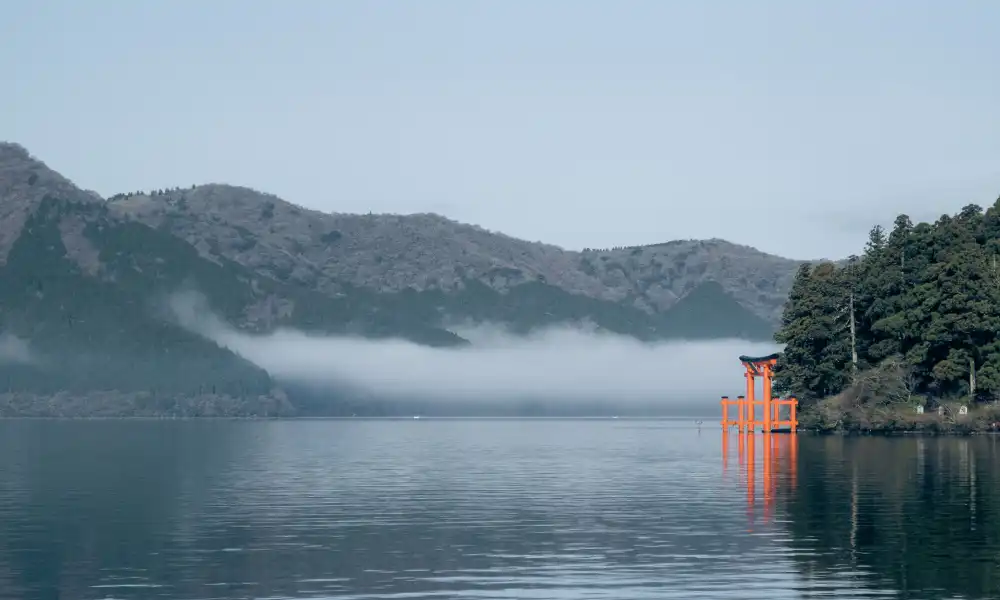
Kyoto – the cultural heart of Japan
Kyoto is where the Japan of the imagination becomes real. Former imperial capital, home to over 1,600 Buddhist temples and 400 Shinto shrines, and surrounded by wooded hillsides – this city rewards slow, unhurried exploration over several days.
Five nights is the recommended minimum. It gives you time to reach the major sights at the early hour they deserve, take a day trip to Nara, and still spend evenings wandering the Gion district on the off chance of spotting a geiko or maiko heading to an appointment.
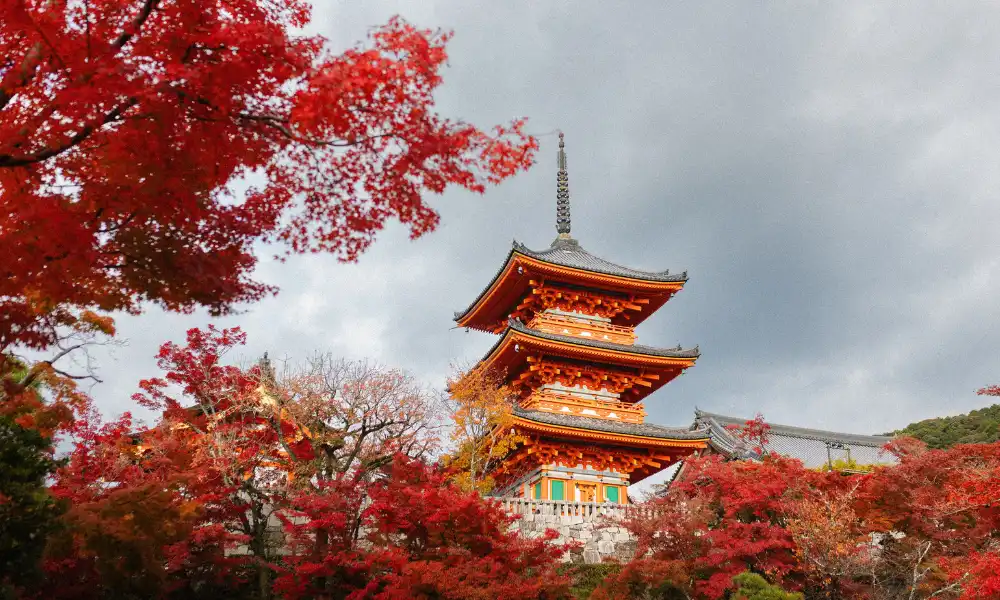
Fushimi Inari Taisha
The Fushimi Inari Shrine is the image most often associated with Kyoto – thousands of bright vermilion torii gates winding up a wooded mountainside. The full hike to the summit and back takes around two and a half hours. The key is to arrive by 07:00 at the latest. Later in the morning, the gates become so dense with tourists that getting a clear photograph is nearly impossible and the spiritual atmosphere is largely lost.
Arashiyama bamboo grove
The same logic applies to Arashiyama's bamboo grove: come early or resign yourself to being shoulder-to-shoulder with other visitors. The grove itself takes only minutes to walk through, but the surrounding Arashiyama district has enough temples, riverside walks, and small restaurants to fill an entire day. Tenryu-ji, the Zen temple at the entrance to the grove, has a garden that is considered one of the finest in Japan.
Kinkaku-ji (the Golden Pavilion)
Kinkaku-ji is the most visited site in all of Japan for a reason. The gold-leaf-covered temple reflecting in the still pond in front of it is extraordinary in person. Arrive before opening at 09:00 if you want any hope of a quiet moment. The gardens are immaculately kept and worth a slow wander even after you've taken the obligatory photographs.
Day trip to Nara
Nara is a thirty-minute train ride from Kyoto and makes an excellent half-day excursion. The city's park is home to over a thousand deer that are considered sacred and are remarkably comfortable around people. Vendors sell flat 'deer crackers' that the animals have learned to associate with tourists, meaning they follow you hopefully and bow when prompted by someone bowing to them first. The Todai-ji Temple at the back of the park houses Japan's largest bronze Buddha statue.
Hiroshima and Miyajima – history and one of Japan's most iconic images
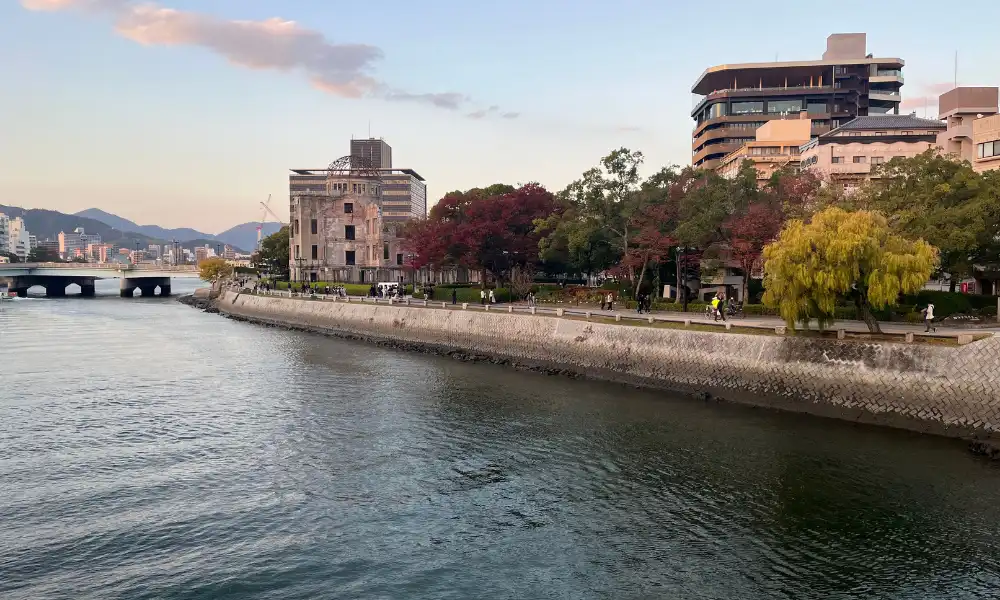
The Shinkansen journey from Kyoto to Hiroshima takes around ninety minutes and is one of the most worthwhile detours on any Japan travel guide. Hiroshima in 2025 is a modern, vibrant city – but visiting the Peace Memorial Museum and Park remains a profound and necessary experience. The museum documents the events of August 1945 with remarkable care and clarity. It is not a comfortable visit, but it is an important one.
From Hiroshima, take a short train and ferry combination to Miyajima Island. The great torii gate of the Itsukushima Shrine stands in the sea just offshore, appearing to float at high tide. It is one of the most reproduced images in Japan and looks, if anything, more striking in person than in photographs.
Miyajima also has its own resident deer, a small shrine town worth exploring on foot, and excellent street food including freshly made oysters (the island is famous for them) and momiji manju – maple leaf-shaped cakes filled with sweet red bean paste.
Osaka – the food capital that rounds off your Japan itinerary
Osaka is the final stop on the classic two-week Japan itinerary, and many travellers leave it as their favourite city of the trip. It has a noticeably different energy to Kyoto or Tokyo – louder, more irreverent, and centred almost entirely around food and street life.
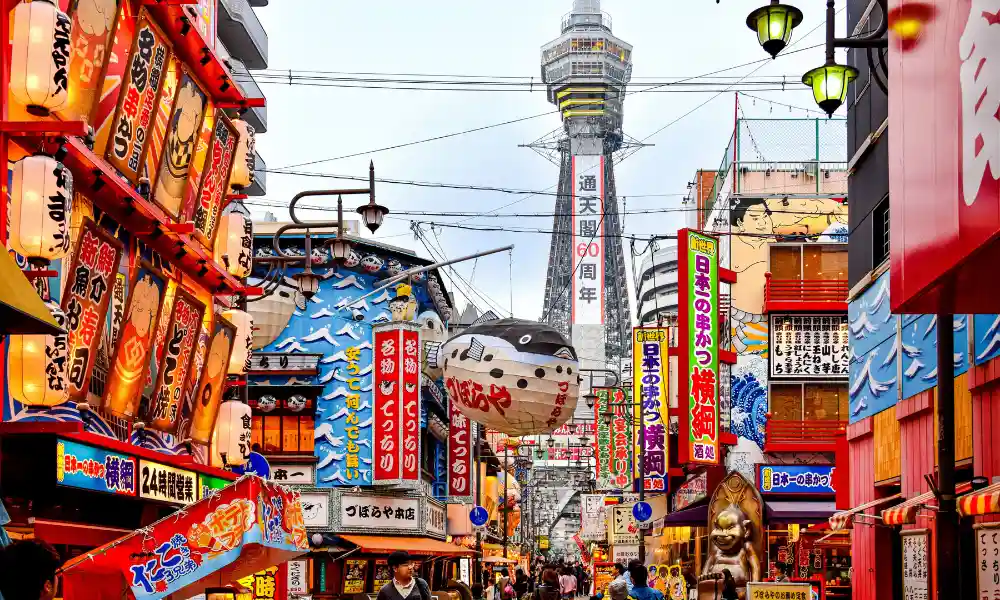
Dotonbori is the neighbourhood to base your evenings around. The canal-side strip is lit up with enormous neon signs – the running Glico Man is the most famous – and lined with restaurants serving every Osaka speciality. Takoyaki (octopus balls), okonomiyaki (savoury pancakes layered with noodles, egg, and meat), and kushikatsu (deep-fried skewers) are the local staples. Try the Hiroshima-style okonomiyaki in Hiroshima and the Osaka version here; they're made differently and both are excellent.
Osaka Castle is worth a morning visit. You don't need to pay to enter the main tower to enjoy the grounds – the stone walls and moat surrounding the keep are impressive from outside, and the views from the top floor give useful context to the city's layout.
If you have a spare afternoon, the Umeda Sky Building in northern Osaka has one of the city's best observation platforms, connected by what is claimed to be the world's highest outdoor escalator. The view over the city at sunset is excellent.
Practical tips for your Japan travel guide
Cash is still essential
While more businesses in Japan now accept card payments, cash remains indispensable. Smaller restaurants, street food vendors, temple admission desks, and many ryokans still operate on a cash-only basis. Make sure you have yen available at all times – 7-Eleven and Japan Post ATMs are the most reliable for international cards.
Booking popular attractions in advance
Several of Japan's most visited attractions require advance ticket purchases, sometimes weeks ahead. The teamLab Borderless digital art museum in Tokyo (reopened in a new venue in 2024), Shibuya Sky, and popular Shinkansen routes during cherry blossom season (late March to mid-April) will sell out. Build the booking into your planning rather than leaving it to chance.
What to do if your flights to Japan go wrong
Long-haul flights to Tokyo or Osaka usually connect through major hub airports in Europe or the Middle East. If you're flying to Japan on a Japan Airlines service departing from a European airport, EU Regulation 261/2004 (EC261) may entitle you to compensation if your flight is delayed by three hours or more at the final destination. The same regulation applies to
All Nippon Airways (ANA) flights departing from EU or UK airports. If a connection through a European hub causes you to miss your onward flight and you arrive at your final destination significantly late, a missed connection claim may be worth pursuing on return.
Language and etiquette
English is not widely spoken outside tourist areas, hotel staff, and some younger city residents. Google Translate's camera feature (which translates text in real time through your phone camera) is useful for menus and signs. Learning a handful of basic Japanese phrases – arigato (thank you), sumimasen (excuse me), and eigo ga hanasemasu ka (do you speak English?) – will be appreciated by locals even if the conversation goes no further.
A few cultural norms to observe: remove your shoes when entering a home, ryokan room, or any space with tatami flooring. Don't eat or drink while walking, particularly in quieter areas. Tipping is not customary in Japan and can cause confusion or even mild offence – simply expressing gratitude is the preferred way to acknowledge good service.
A suggested two-week Japan itinerary at a glance
This structure works well for most first-time visitors:
- Days 1–4: Tokyo – Shibuya, Harajuku, Shinjuku, Asakusa, Akihabara
- Day 5: Hakone – Ropeway, Owakudani, onsen ryokan overnight
- Days 6–10: Kyoto – Fushimi Inari, Arashiyama, Kinkaku-ji, Gion; day trip to Nara
- Days 11–12: Hiroshima and Miyajima Island
- Days 13–14: Osaka – Dotonbori, Osaka Castle, Namba, departure from Kansai International Airport (KIX)
This itinerary is intentionally linear: you fly into Tokyo, travel south-west by Shinkansen, and depart from Osaka's Kansai International Airport. It avoids backtracking, keeps travel time between destinations manageable, and leaves room to slow down when a place catches you.
Final thoughts on spending two weeks in Japan
Two weeks in Japan will not be long enough to see everything. It will, however, be long enough to understand why so many people return for a second, third, or fourth visit. The combination of culture, food, technology, history, and natural landscape is genuinely unmatched anywhere else in the world. The country is more accessible than first-time visitors expect, more affordable than its reputation suggests, and – in ways that are difficult to explain in advance – simply unlike anywhere else you've been.
Plan carefully, book the high-demand attractions early, and sort your travel logistics (Suica card, eSIM, Shinkansen tickets) before you land. If your outbound or return flights encounter problems, remember that UK and EU passengers have rights under EC261 – and knowing what you can claim for when a flight is delayed could make a frustrating disruption much easier to deal with. Japan deserves your full attention when you arrive – make sure the journey there is as sorted as it can be.
claim now
Have you had a flight delay, missed connection, cancelled flight or have been denied boarding in the last 6 years? If so try our free flight checker to see how much you may be entitled to in compensation for you AND your fellow travellers.
Start a Claim