- Home
- Make a claim
- Airlines
- Adria Airways
- Aegean Airlines
- Aer Lingus
- Aeroflot Russian Airlines
- AeroMexico
- Air Albania
- Air Algerie
- Air Arabia
- Air Austral
- Air Baltic
- Air Canada
- Air China
- Air Corsica
- Air Dolomiti
- Air Europa
- Air France
- Air India
- Air Malta
- Air Mauritius
- Air Moldova
- Air New Zealand
- Air Philippines
- Air Senegal International
- Air Serbia
- Air Transat
- Alitalia Express
- All Nippon Airways
- American Airlines
- Arkia Israel Airlines
- ASL Airlines
- Atlantic Airways
- Aurigny Air Services
- Austrian Airlines
- Avianca
- Azerbaijan Airlines
- Azores - SATA International
- Biman Bangladesh Airlines
- Blue Air
- Blue Islands
- Bluebird Airways
- BMI Regional
- British Airways
- Brussels Airlines
- Brussels International Airlines
- Bulgaria Air
- Buzz Stansted
- Cathay Pacific
- China Airlines
- China Eastern Airlines
- Continental Airlines
- Corendon Airlines
- Croatia Airlines
- Cyprus Airways
- Czech Airlines
- Delta Air Lines
- Eastern Airways
- easyJet
- Egyptair
- El Al
- Emirates
- Envoy Air
- Ethiopian Airlines
- Etihad Airways
- Eurowings
- Finnair
- Fly One
- Flybe
- Flyr
- Gol Transportes Areos
- Gulf Air
- Helvetic Airways
- HiSky
- Iberia Airlines
- Iberia Express
- Icelandair
- Iran Air
- Iraqi Airways
- ITA Airways
- Japan Airlines
- Jazeera Airways
- Jet Airways
- Jet2
- JetBlue
- Juneyao Air
- Kenya Airways
- KLM
- Korean Air
- Kuwait Airways
- LATAM Airlines
- Lauda Europe
- Loganair
- LOT Polish Airlines
- Lufthansa
- Luxair
- Malaysia Airlines
- Norse
- Norwegian
- Nouvelair Tunisie
- Pakistan International Airlines
- Pegasus Airlines
- Play Airlines
- Qantas
- Qatar Airways
- Rossiya Russian Airlines
- Royal Air Maroc
- Ryanair
- SAS
- Saudia
- Scoot
- Silk Way Airlines
- Singapore Airlines
- Sky Express
- South African Airways
- SriLankan Airlines
- SunExpress
- Sunwing Airlines
- Surinam Airways
- Swiss International
- TAP Air Portugal
- Thai Airways
- Transavia
- TUI
- Tunisair
- Turkish Airlines
- Turkmenistan Airlines
- Ukraine International Airlines
- Vietnam Airlines
- Virgin Atlantic
- Vueling Airlines
- WestJet
- Wideroe
- Wizz Air
- Airports
- FAQ's
- Compensation Calculator
- Recent Flight Delays
- Blog
- About Us
- Contact Us
Reasons passengers get refused boarding — and what you can do about it
Date: 18 MAY 26
There are many reasons passengers get refused boarding every single day across airports worldwide — and not all of them are the passenger’s fault. Whether it is an airline that has sold more tickets than seats, a passport that falls short of entry requirements, or arriving at the gate a few minutes too late, the result is the same: you are not getting on that plane.
Being bumped from a flight is stressful, costly, and often avoidable if you know what to look out for. This guide covers the most common reasons airlines refuse to let passengers board, and — where the airline is at fault — what your rights are under UK law.
Overbooking: the most common reason for denied boarding
Airlines routinely sell more tickets than there are seats on a plane. The logic is straightforward: a percentage of passengers typically miss or cancel their flights, so airlines oversell to fill every seat. When too many people actually show up, some have to be left behind.
This practice is legal, but it does come with obligations. Under UK261 regulations — the UK’s retained version of EU Regulation 261/2004 — airlines must first ask for volunteers willing to give up their seats in exchange for compensation. Only if there are not enough volunteers can the airline bump passengers involuntarily.
If you are involuntarily denied boarding because of overbooking and you checked in on time with valid documents, you are entitled to denied boarding compensation. The amount depends on the distance of the flight:
- Flights under 1,500 km — up to £220
- Flights between 1,500 km and 3,500 km — up to £350
- Flights over 3,500 km — up to £520
Compensation is paid per passenger, not per booking. If you believe you were bumped unfairly, you can start a denied boarding claim to recover what you are owed.
Invalid or missing travel documents
Document problems are arguably the most avoidable reason passengers get refused boarding, yet they catch travellers out time and time again. Airlines are legally responsible for ensuring that the passengers they carry hold the correct documentation to enter the destination country. If they get it wrong, they face fines — so gate staff check carefully.
Passport validity issues
Many countries require your passport to be valid for at least six months beyond your return date. Some destinations require a minimum of three months. A passport that is technically ‘in date’ may still fail these rules. Check the specific requirements for your destination well before you travel.
It is also worth noting that EU countries consider passports to have expired after ten years from their issue date, even if the printed expiry date shows otherwise. This catches UK travellers out more often than you might expect.
Missing visas, ETAs, and entry permits
Depending on your nationality and destination, you may need a visa, Electronic Travel Authorisation (ETA), or ESTA. These are your responsibility to obtain before you fly. An airline will not board you without them, and ‘I didn’t know I needed one’ is not an accepted reason. If you were denied boarding for missing documents, this is generally not a situation that qualifies for denied boarding compensation under UK261, as the airline is acting within its rights.
No proof of onward or return travel
Some countries require passengers to show a return ticket or proof of onward travel before allowing entry. If you cannot demonstrate this at check-in, the airline may refuse to board you. This is particularly common for long-haul travel and single-leg bookings to popular holiday destinations.
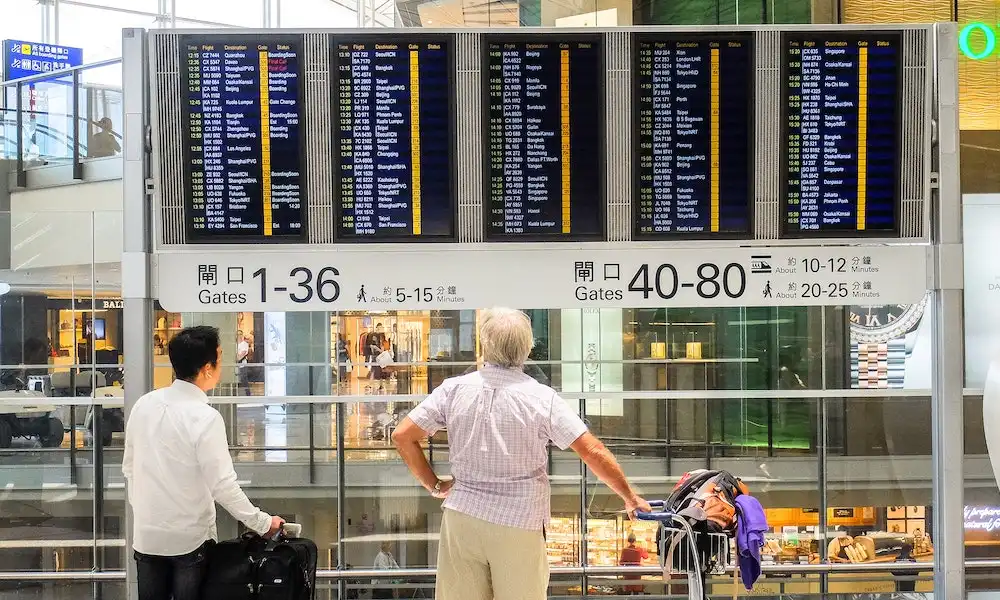
Arriving too late at check-in or the gate
Airports can be unpredictable. Security queues, long terminal walks, and last-minute gate changes all eat into your time buffer. If you arrive at the departure gate after it has closed — even if the plane is still on the stand — most airlines will not let you board.
Similarly, missing the check-in deadline, even by a few minutes, can result in your seat being released. This is entirely within the airline’s rights and does not qualify for denied boarding compensation under UK261. The best protection is arriving at the airport early, ideally two to three hours before a short-haul departure and three or more hours before a long-haul flight.
Disruptive behaviour and intoxication
Airlines and their ground staff have the authority to refuse boarding to any passenger they consider a safety or security risk. This includes passengers who are visibly drunk, aggressive towards staff or other travellers, or displaying behaviour that suggests they may become disruptive in the air.
The captain of a flight has extremely broad discretion to refuse carriage to someone they believe poses a risk, and this decision is rarely overturned. Being refused boarding for disruptive behaviour does not entitle you to denied boarding compensation — and in some cases, airlines may pass the details to relevant authorities.
Health concerns and fitness to fly
Airlines can and do refuse to board passengers who appear to be seriously unwell. A passenger showing signs of a contagious illness, running a high fever, or who has recently had major surgery may be asked to provide medical clearance before flying — or denied boarding entirely.
Pregnancy is another consideration. Most airlines have policies restricting travel in the later stages of pregnancy, typically beyond 36 weeks for a single birth, and may ask for a letter from a doctor confirming the passenger is fit to fly.
These decisions are made on safety grounds and do not typically qualify for denied boarding compensation under UK law.
Security concerns and no-fly lists
Passengers can be denied boarding if they appear on a government no-fly list, have been flagged by security services, or are carrying prohibited items. Security-based refusals are non-negotiable and do not come with compensation entitlements.
There are also cases where passengers have been refused boarding because they share a name with someone on a restricted list. This can be genuinely frustrating when the passenger is entirely innocent. If this happens to you, escalate to a supervisor immediately and keep a paper trail of everything.
Baggage disputes and excess luggage refusal
Passengers who refuse to pay for overweight, oversized, or excess baggage can be denied boarding. Airlines are within their rights to enforce their published baggage policies at check-in. If your bag does not meet the stated dimensions or weight limits and you decline to pay the surcharge or reduce your luggage, you may find yourself at the gate without a boarding pass.
Check your airline’s specific baggage policy before you travel. Budget carriers in particular are strict on this, and the fees for paying at the airport are almost always higher than paying online in advance.
Name mismatches and booking errors
Your booking must match your passport exactly. Even minor discrepancies — a middle name included on the ticket but not the passport, a misspelling, or a hyphenated surname treated differently — can cause issues at check-in, particularly on international routes where documents are checked carefully.
Booking errors made by third-party travel agents or online platforms are another common source of problems. If your booking was made through a consolidator or booking site and there has been a ticketing error, you may arrive at the airport to find your reservation is not recognised by the airline. Always double-check your booking confirmation immediately after purchase and contact the booking platform if anything looks wrong.
Aircraft changes and operational decisions by the airline
Sometimes airlines switch to a smaller aircraft at short notice due to maintenance, crew issues, or operational requirements. This instantly creates an overbooking situation even if the original flight was not oversold. Passengers can also be bumped because of crew planning changes or weight and balance restrictions on smaller aircraft.
Where the airline is responsible — meaning the operational decision was within their control — and you checked in on time, this situation qualifies as involuntary denied boarding under UK261. You should be entitled to the same denied boarding compensation as if you had been bumped due to overbooking.
Travelling with children without the correct authorisation
If you are travelling internationally with a child who has a different surname, some countries and airlines require documentation proving your legal relationship to the child or authorisation from the other parent. This is most common for single parents or grandparents travelling with grandchildren.
Requirements vary by destination, so it is worth checking the Foreign, Commonwealth and Development Office (FCDO) guidance for your specific route before you travel.
Your rights when you are refused boarding due to overbooking
Not all of the reasons passengers get refused boarding entitle them to compensation. The key distinction under UK261 is whether the airline was responsible and whether you met your obligations as a passenger.
If you were involuntarily denied boarding — meaning the refusal was the airline’s decision and not caused by anything on your part — and you had:
- A confirmed booking for the flight
- Checked in on time, either at the airport or online
- All required travel documents in order
- Arrived at the departure gate with enough time to board
... then you are entitled to financial compensation, a choice between a full ticket refund or rerouting to your destination, and care and assistance while you wait (food, drinks, accommodation if necessary, and two free communications).
How long do you have to make a claim?
In the UK, passengers generally have up to six years to submit a denied boarding compensation claim (five years for Scottish residents). That means even if you were bumped from a flight some years ago, you may still have a valid claim. You can use our free compensation calculator to find out how much you could be owed.
Quick pre-flight checklist to avoid being refused boarding
Most of the common reasons passengers get refused boarding are preventable with a little preparation. Before every flight, run through the following:
- Check your passport is valid for the required period beyond your return date for your specific destination
- Confirm whether you need a visa, ETA, ESTA, or any other entry documentation and apply in advance
- Review your airline’s baggage policy and weigh your bags before leaving home
- Double-check that the name on your booking matches your passport exactly
- Arrive at the airport well ahead of the check-in deadline and allow extra time at security
- If travelling with a child under a different surname, carry supporting documentation
What to do if you were refused boarding and it was not your fault
If the airline denied you boarding due to overbooking or an operational decision that was entirely within their control, you should not simply accept it and move on. You have legal rights under UK261 that entitle you to financial compensation, and those rights do not disappear just because the airline makes the process difficult.
The first step is to document everything. Keep your boarding pass, any written communication from the airline, and receipts for any expenses you incurred as a result of the denied boarding — meals, accommodation, additional transport.
Airlines do not always make it easy to claim what you are owed. Many passengers give up when faced with initial refusals or bureaucratic delays. Knowing your flight denied boarding rights — and being prepared to enforce them — is the difference between walking away empty-handed and receiving the compensation the law says you deserve.
If your flight was also significantly delayed as part of the same disruption, it is worth checking whether a flight delay compensation claim also applies to your situation.
claim now
Have you had a flight delay, missed connection, cancelled flight or have been denied boarding in the last 6 years? If so try our free flight checker to see how much you may be entitled to in compensation for you AND your fellow travellers.
Start a Claim